
Odisha’s handloom story is not something you read about in a brochure and forget by evening. It lives in the hands of weavers who have spent decades at the loom, in patterns passed down through generations, and in fabrics that carry the state’s history in every thread. Once a year, that story gets a stage of its own, and this August, Bhubaneswar hosted it once again in the form of the 12th State-Level National Handloom Day Exhibition.
The event brought together master weavers, artisans, designers and thousands of visitors under one roof, turning the exhibition ground into a living showcase of what Odisha’s textile and handicraft tradition looks like today — rooted in heritage, yet unmistakably contemporary.
Event Details at a Glance
The exhibition was held at the IDCO Exhibition Ground, Unit-III, Bhubaneswar, running from 7th to 15th August 2026. Visitors could walk through the stalls daily between 12:00 Noon and 8:30 PM, giving families, students, textile enthusiasts and buyers a generous window to explore everything on display at their own pace.
A Grand Beginning
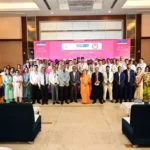
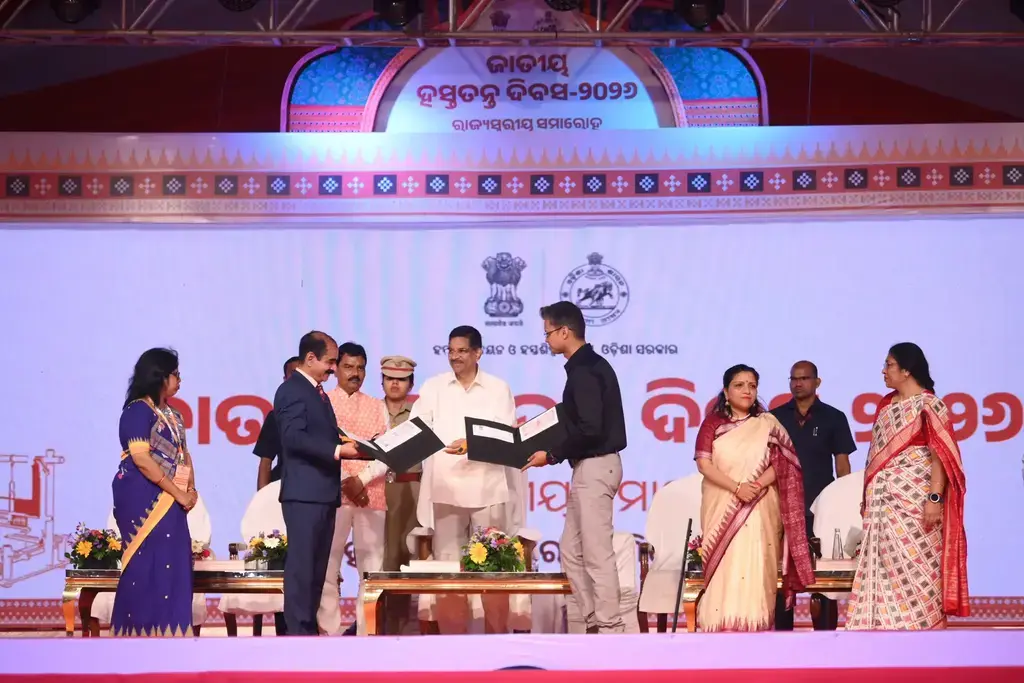
The exhibition opened with a formal inauguration graced by Dr. Hari Babu Kambhampati, Hon’ble Governor of Odisha, whose presence set the tone for the days that followed. He was joined by several distinguished dignitaries from the Government of Odisha, whose support reflected just how much weight this exhibition carries as an annual event for the state’s handloom sector. The inauguration wasn’t just a ceremonial formality — it was a clear signal that Odisha continues to place its weaving communities and their craft at the center of its cultural identity.
The Legacy of Sambalpuri Ikat and Odisha’s Weaves
No conversation about Odisha’s handloom heritage is complete without Sambalpuri Ikat, and this exhibition made sure it got the spotlight it deserves. The tie-dye technique behind these textiles is famously intricate, requiring weavers to dye each thread precisely before it even reaches the loom, so that the final pattern emerges exactly as intended once weaving begins. It’s a process that demands patience and an almost mathematical precision, and the results speak for themselves in the bold geometric motifs and rich colours that Sambalpuri sarees and fabrics are known for across the country.
Alongside Ikat, visitors got a close look at other Odisha silks and traditional weaves, each stall a small window into a different weaving cluster and its distinct style. What stood out most was the presence of the master weavers themselves — many of whom have spent their entire lives at the loom — sharing their craft directly with visitors instead of leaving the story to be told secondhand.
Where Tradition Met Modern Design
What made this year’s exhibition particularly interesting was how comfortably heritage sat next to innovation. Alongside traditional weaves, there were contemporary interpretations of Odisha’s textile legacy — fresh silhouettes, updated colour palettes and new collaborations that reimagined age-old techniques for a modern wardrobe. This blending isn’t about diluting tradition; it’s about giving it new relevance so younger buyers see handloom not as something confined to special occasions, but as a genuine style choice for everyday life.
Culture Took Center Stage
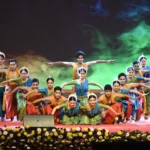
Beyond the stalls, the exhibition came alive through its cultural programming. An Odissi performance brought the grace of Odisha’s classical dance form to the evenings, while a fashion showcase gave designers the chance to present handloom in contemporary silhouettes on the runway. Adding a musical touch to the celebrations, renowned Ollywood singer Asima Panda delivered a soulful performance that drew large crowds and gave the exhibition an added sense of festivity each evening.
Why Exhibitions Like This Matter
Events of this scale do more than put beautiful fabrics on display. They give weavers and artisans, many of them from remote clusters across Odisha, direct access to buyers, exposure and recognition that can be hard to come by otherwise. For a craft that depends entirely on continued demand to survive, that connection between maker and buyer is invaluable.
Just as importantly, exhibitions like this keep the craft visible to a new generation. When students, young professionals and families walk through and see the effort behind every saree or fabric on display, it builds an appreciation that goes beyond just admiring the design — it creates buyers, advocates and, hopefully, future custodians of the craft.
Seventh Avenue Eventz Behind the Scenes
Pulling off an exhibition of this scale, spanning nine days and drawing large daily footfall, takes considerable planning and on-ground coordination. Seventh Avenue Eventz Pvt. Ltd. took charge of executing the event successfully, managing everything required to bring heritage, innovation, culture and visitor experience together on one platform without a hitch. From coordinating the stalls to supporting the cultural programming each evening, the team ensured the exhibition ran smoothly across its entire duration, letting the focus stay exactly where it belonged — on the weavers and their craft.
Closing Thoughts
The 12th State-Level National Handloom Day Exhibition came to a successful close on 15th August, wrapping up nine days that celebrated Odisha’s handloom heritage in the fullest sense. It was a reminder that behind every Sambalpuri Ikat saree and every handwoven fabric lies a story of skill, patience and generations of tradition — and that stories like these deserve to be seen, celebrated and carried forward.
Frequently Asked Questions
What was the 12th State-Level National Handloom Day Exhibition about?
It was a nine-day exhibition in Bhubaneswar celebrating Odisha’s handloom and handicraft heritage, bringing together master weavers, artisans and designers to showcase traditional and contemporary textiles under one roof.
Where and when was the exhibition held?
The exhibition was held at the IDCO Exhibition Ground, Unit-III, Bhubaneswar, from 7th to 15th August 2026, and was open to visitors daily from 12:00 Noon to 8:30 PM.
What kind of handloom products were showcased at the exhibition?
Visitors could explore Sambalpuri Ikat, Odisha silks and other traditional weaves, along with contemporary designs that reinterpret these traditional textiles for modern wear.
What cultural programs were part of the exhibition?
The exhibition featured an Odissi dance performance, a fashion showcase highlighting handloom in modern silhouettes, and a musical performance by renowned Ollywood singer Asima Panda.
Who managed the execution of the exhibition?
The exhibition was successfully executed by Seventh Avenue Eventz Pvt. Ltd., which coordinated the event end-to-end, bringing together heritage, innovation, culture and visitor experience on one platform.
Why are handloom exhibitions important for Odisha’s weaving communities?
They give weavers and artisans direct access to buyers and wider recognition, while also helping preserve traditional crafts by introducing them to new generations of consumers.